Radiant Diamond
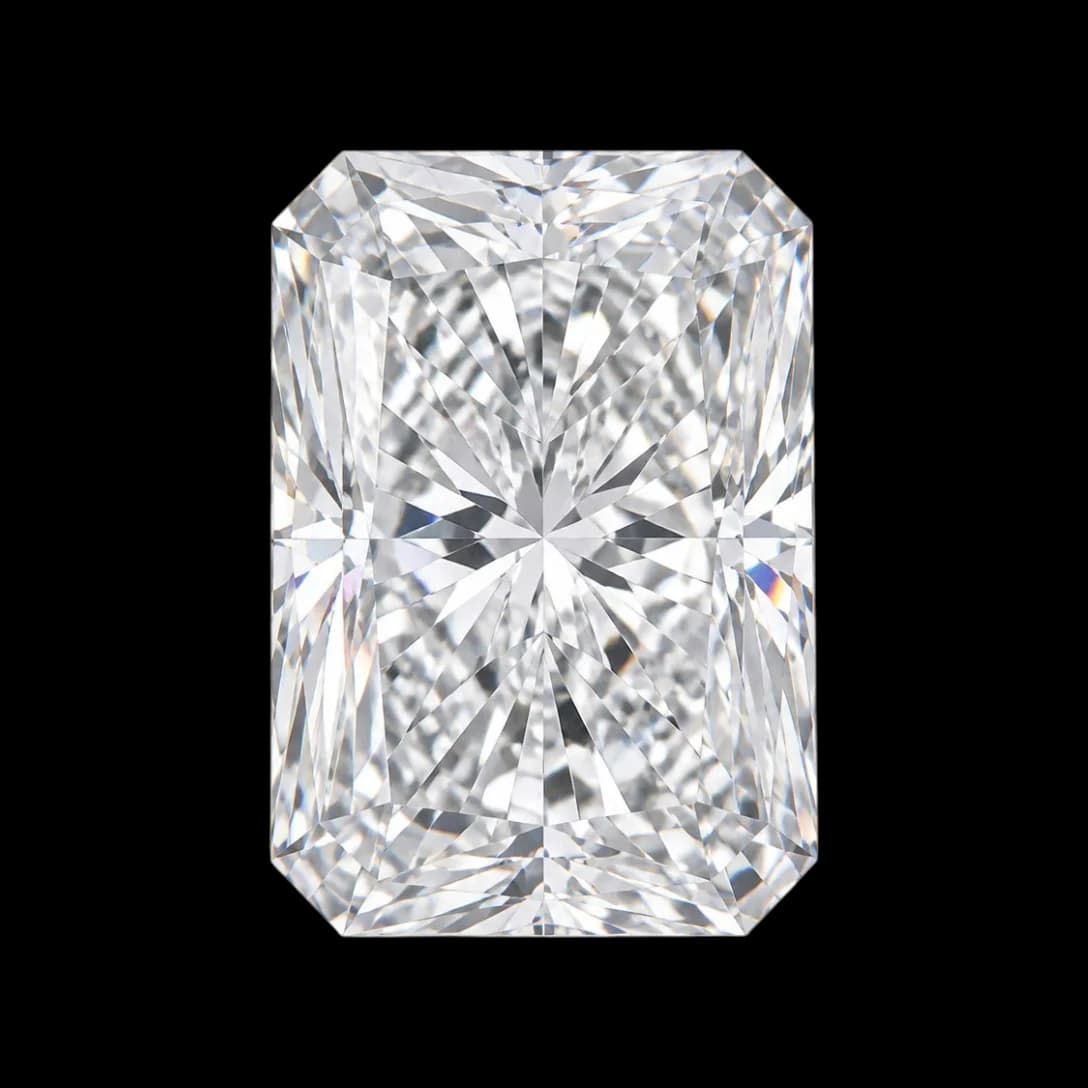
The radiant cut combines the elegant outline of an emerald cut with the brilliance of a round brilliant, featuring trimmed corners and a brilliant-style facet pattern. It offers the best of both worlds: geometric lines with exceptional sparkle.
Is a radiant diamond a good choice?
Radiant diamonds are known for very high brilliance with 70 facets. They're popular for engagement rings and three-stone rings. Here are the trade-offs.
Why people love it
- +Combines a geometric outline with brilliant-cut sparkle, unique among diamond shapes
- +Trimmed corners make it more durable than sharp-cornered shapes like princess
- +Excellent at hiding inclusions and body color due to brilliant faceting
- +25-35% less expensive than comparable round brilliants
- +Outstanding choice for fancy colored diamonds because the faceting intensifies color
Things to know
- −Can face up slightly smaller than other shapes of equal carat weight due to depth
- −No standardized cut grade from major labs, so quality evaluation requires expertise
- −Less well-known than other shapes. Some buyers may not recognize it
- −The complex facet pattern can sometimes produce a crushed ice appearance
How big is a radiant diamond? (MM to carat)
A 1-carat radiant diamond measures approximately 5.7 x 5.7 mm. Here are the most common sizes from 0.25 ct to 5 ct.
| Carat Weight | Size (mm) |
|---|---|
| 0.25 ct | 3.5 x 3.5 mm |
| 0.33 ct | 3.8 x 3.8 mm |
| 0.5 ct | 4.5 x 4.5 mm |
| 0.75 ct | 5.2 x 5.2 mm |
| 1 ct | 5.7 x 5.7 mm |
| 1.25 ct | 6.1 x 6.1 mm |
| 1.5 ct | 6.5 x 6.5 mm |
| 2 ct | 7.2 x 7.2 mm |
| 2.5 ct | 7.6 x 7.6 mm |
| 3 ct | 8.1 x 8.1 mm |
| 4 ct | 8.9 x 8.9 mm |
| 5 ct | 9.5 x 9.5 mm |
View full radiant size chart → with all sizes from melee to 5+ carats.
How to buy a radiant diamond
- •Decide between square (1.0-1.05 L/W) and rectangular (1.15-1.35 L/W) before shopping. They look very different
- •SI1 clarity is usually eye-clean in radiants thanks to the brilliant facet pattern
- •Color is well-masked. You can often drop to I or J color without visible warmth
- •If you're considering an emerald cut but want more sparkle, the radiant is your answer
- •For fancy colored diamonds (yellow, pink), the radiant is often the best shape to intensify color
- •Check depth percentage: aim for 61-67% for optimal light performance
- •Request video to verify even sparkle distribution. Avoid stones with dead zones
What makes a radiant diamond unique?
How much does a radiant diamond cost?
Radiant diamonds are priced at 25-35% less than round brilliant. Price depends on carat weight, color, clarity, and cut quality. For a personalized estimate, use our diamond price estimator.
Estimate radiant diamond price →Technical Specifications
- Facets
- 70
- Brilliance
- very high
- L:W Ratio
- 1.0:1 to 1.05:1 (square) or 1.15:1 to 1.40:1 (rectangular)
Last updated: 2026-08-12
At a Glance
- Price vs Round
- 25-35% less than round brilliant
- Popularity
- Moderate popularity (approximately 3-5% of engagement ring sales, growing)
- Sparkle
- very high
Best For
Setting Ideas
- Three-stone with baguette or trapezoid side stones (the quintessential radiant setting)
- Solitaire with four prongs, simple and effective
- Halo that adds perceived size while highlighting the geometric outline
- Bezel setting that complements the trimmed corners and protects the stone
- Channel-set band. Radiants sit well side by side in channel settings
- Cathedral setting. The elevated profile showcases the stone beautifully
Related Shapes
Frequently asked questions
Is a radiant cut diamond a good choice?
Yes. Radiant cuts combine the geometric outline of an emerald cut with the sparkle of a brilliant cut, and they cost 25 to 35% less per carat than rounds. Their 70-facet brilliant pattern hides inclusions and body color well, making them an outstanding choice for fancy colored diamonds. They can face up slightly smaller than other shapes at equal weight due to depth.
How big is a 1-carat radiant cut diamond?
A 1-carat radiant cut measures approximately 5.7 x 5.7 mm for a square radiant. Rectangular radiants at 1 carat will have different length and width measurements depending on the length-to-width ratio.
How much does a radiant cut diamond cost?
Radiant cuts typically cost 25 to 35% less per carat than comparable round brilliants. They represent one of the strongest value propositions among fancy shapes, especially for buyers who want geometric lines without sacrificing brilliance.
What is the best setting for a radiant cut diamond?
A three-stone setting with baguette or trapezoid side stones is the quintessential radiant pairing and highlights the cut's architectural lines. A four-prong solitaire is simple and effective, and a bezel complements the trimmed corners while protecting the stone.
What is the difference between radiant and cushion cut?
Both are modified brilliants with soft or trimmed corners, but the radiant has a more geometric, rectangular or square outline with distinctly trimmed corners. Cushion cuts have rounded corners and a pillow-like silhouette. Radiants also use a more complex facet pattern with 70 facets compared to the cushion's 58, giving a sharper, more angular sparkle.