
Bracelet Clasp Types: A Complete Guide
Lobster, toggle, box, magnetic, fold-over, and more. How each bracelet clasp works, security ratings, and which one to pick for your piece.
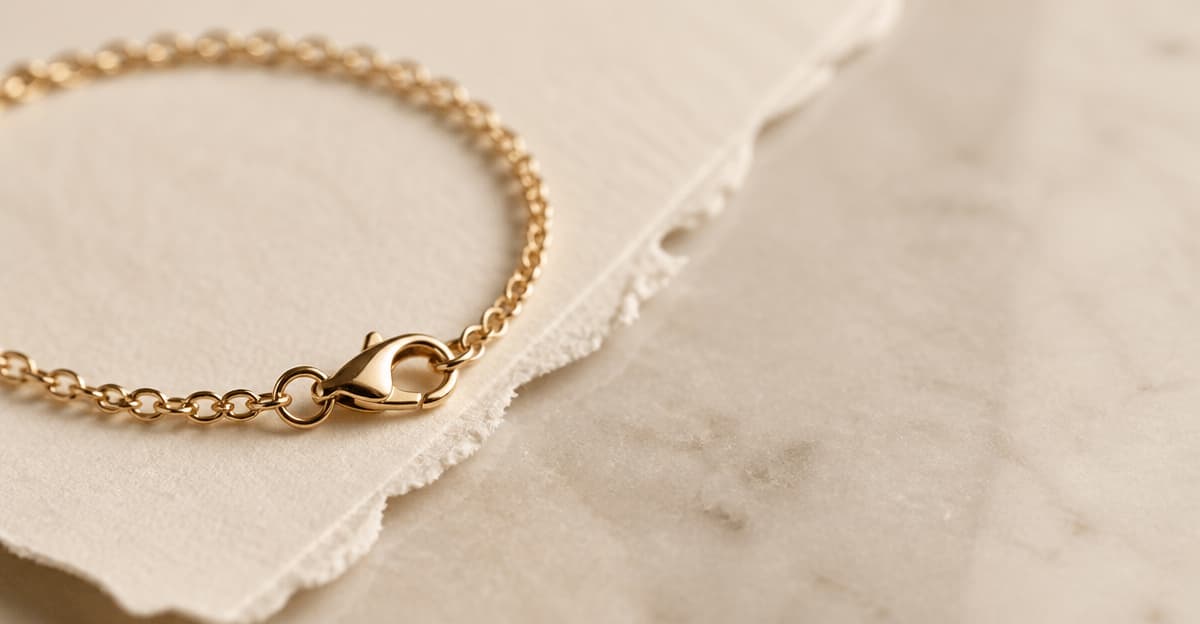
The clasp is the part of a bracelet most people never think about. Until it fails and the bracelet hits the sidewalk.
Picking the right clasp matters. For jewelers, it's a design and engineering decision. For buyers, it's the difference between wearing a piece every day and leaving it in a drawer because you can't fasten it one-handed. We've seen $5,000 bracelets returned because the clasp was fiddly. And $50 bracelets worn daily for years because the clasp just worked.
Here's every major clasp type, what it's good for, what it's bad for, and when to use each one.
Lobster Claw Clasp
The workhorse of the jewelry industry. A spring-loaded claw opens when you push a small lever, snaps shut when you release. It connects to a jump ring or loop on the other end of the chain.
Lobster clasps are the default for most chain bracelets and necklaces under $500. They're reliable, inexpensive, and available in every metal from brass to platinum. The spring mechanism has a long lifespan, typically thousands of open-close cycles before it weakens.
The downside? Difficult to fasten one-handed on a bracelet. You need to hold the lever open while connecting it to the ring, and on your wrist that means using the hand wearing the bracelet. For necklaces this is less of an issue.
Security: high. The spring mechanism keeps it locked unless deliberately opened. Accidental opening is rare unless the spring wears out.
Best for: chain bracelets, charm bracelets, everyday jewelry. Most common clasp type overall.
Toggle Clasp
A bar pushes through a ring. That's it. The bar is longer than the ring's diameter, so once through, it sits crosswise and can't pull back out under normal tension.
Toggle clasps are easy to fasten one-handed, which makes them popular for bracelets. And they look good. The ring-and-bar design becomes a decorative element. Designers often make the toggle part of the visual identity of a piece.
Here's the risk: toggles rely on tension from the chain to stay closed. If the bracelet is too loose, the bar can rotate and slip back through the ring. We've seen this happen with stretchable cord bracelets or any piece where the chain has too much slack. On a properly fitted chain bracelet with some weight to it, toggles hold fine.
Security: medium. Reliable when the bracelet fits well. Risky on loose or lightweight chains.
Best for: statement pieces, heavier chain bracelets, beaded bracelets. Looks better than a lobster claw when the clasp is visible.
Box Clasp (Tab Insert)
A flat tab slides into a box and clicks into place. A small lever on the side releases the tab. Some box clasps have an additional safety catch (a fold-over hook) for extra security.
Box clasps sit flat against the wrist, which makes them the go-to for tennis bracelets and wide cuff designs. They distribute force evenly and don't create a bulky point on the bracelet.
The click is satisfying when it works. But manufacturing tolerances matter. A poorly made box clasp won't click firmly, and you'll feel it wobbling. On quality pieces, box clasps are one of the most secure closure types available.
Security: high (very high with safety catch). The tab-and-box mechanism provides positive engagement, and the side lever prevents accidental release.
Best for: tennis bracelets, multi-strand bracelets, fine jewelry. Standard for pieces over $1,000.
Spring Ring Clasp
A circular ring with a spring-loaded opening on one side. Pull back the spring lever, hook it to the opposing ring, release.
Spring rings are cheaper to produce than lobster claws, which is why you'll find them on fashion jewelry and pieces under $100. They function the same way but are harder to operate because they're smaller and the lever requires more finger dexterity.
The spring mechanism is less durable than a lobster claw's. After heavy use, spring rings tend to weaken faster. On fine jewelry, they've mostly been replaced by lobster claws for this reason.
Security: medium-high. The spring mechanism keeps them closed, but the smaller size makes them harder to inspect for wear.
Best for: lightweight chains, fashion jewelry, budget-conscious designs.
Magnetic Clasp
Two halves with embedded magnets snap together. Zero dexterity required. Pull apart to release.
People with arthritis or limited hand mobility love magnetic clasps. They're the easiest to fasten one-handed. But they have a real problem: any strong pull separates them. Catch your bracelet on a door handle and it's on the floor.
Some higher-end magnetic clasps add a safety wire or secondary latch. These solve the security problem but add complexity that defeats the purpose of magnetic simplicity.
Never use magnetic clasps on anything heavy or valuable without a safety chain. We've heard too many stories of pieces lost in restaurants, on airplanes, and in parking lots.
Security: low. Magnets release under moderate tension. Appropriate for lightweight, casual pieces only.
Best for: people with mobility limitations, lightweight beaded bracelets, casual everyday pieces where the risk of loss is acceptable.
Fold-Over Clasp (Deployment Clasp)
Common on watches and fine metal bracelets. The clasp folds in half and a push-button or lever releases it. When closed, it sits flat and the bracelet looks continuous.
Fold-over clasps are the most secure bracelet closure available. Watch brands use them because losing a $10,000 watch to a bad clasp is not an option. The folding mechanism provides double-lock security.
They're more expensive to produce and take up more length than other clasps. On thin, delicate bracelets, a fold-over clasp can feel disproportionate. On substantial metal bracelets and watch bands, they're the standard for good reason.
Security: very high. Double-lock mechanism with positive engagement. The gold standard for valuable pieces.
Best for: watches, luxury metal bracelets, bangles with hinged openings. Any piece where security is the top priority.
Hook-and-Eye Clasp
A simple hook on one end, a loop (eye) on the other. The hook curves through the eye and tension keeps it in place.
Hook-and-eye is the oldest clasp mechanism in jewelry. It's elegant and minimal. But it relies entirely on chain tension to stay closed. No spring, no latch, no magnet. If the chain goes slack, the hook can slip out.
Modern versions add a small safety latch below the hook. This turns a low-security clasp into a medium-security one without changing the aesthetic much.
Security: low to medium. Depends entirely on whether there's a safety latch and how much tension the chain maintains.
Best for: handmade jewelry, artisan pieces, lightweight chains where the designer wants a minimal look. Not recommended for heavy or valuable pieces without a safety catch.
Barrel Clasp (Screw Clasp)
Two halves screw together. One side has male threads, the other female. You twist to close, twist to open.
Barrel clasps are compact, clean, and moderately secure. They won't open from a pull or catch. The only way they open is by unscrewing, which requires deliberate rotation.
The problem: they can unscrew themselves over time. Normal wrist movement creates small rotations, and over weeks, a barrel clasp can work itself loose. Some people add a tiny drop of clear nail polish to the threads as a threadlocker, which works surprisingly well.
Security: medium. Won't accidentally snag open, but can loosen over time from wrist movement.
Best for: bead stringing, pearl bracelets, cord jewelry. Popular with beaders because the clasp nearly disappears.
Slide Clasp (Multi-Strand Clasp)
A long, flat clasp with multiple attachment points. One side slides into the other and locks.
Slide clasps exist for one reason: attaching multiple strands. If you have a four-strand pearl bracelet, a single lobster claw won't work. You need four connection points on each end, aligned and spaced evenly. That's what a slide clasp does.
Security: medium to high depending on the locking mechanism. Better models have a secondary safety catch.
Best for: multi-strand bracelets, pearl bracelets with multiple rows, wide beaded pieces.
Which clasp to choose
For most chain bracelets under $500, a lobster claw is fine. It's reliable, standard, and every jeweler can repair or replace it.
For tennis bracelets and fine jewelry, use a box clasp with a safety catch. The added security is worth the slight cost increase. We've repaired enough broken lobster claws on expensive tennis bracelets to know they're not ideal for heavy daily wear.
For people who struggle with dexterity, magnetic clasps on casual pieces and fold-over clasps on anything valuable.
For artisan or handmade pieces, toggle clasps look better than anything else. Just make sure the bracelet fits properly so the toggle stays engaged.
And for anything worth more than you'd be comfortable losing, add a safety chain regardless of clasp type. It's a $5-20 addition that provides total peace of mind.
If you're choosing clasps for a piece you're making, our jewelry pricing formula covers how to factor in component costs like clasps into your final retail price. And for earrings, we have a similar breakdown of every type of earring back with comfort and security ratings.