
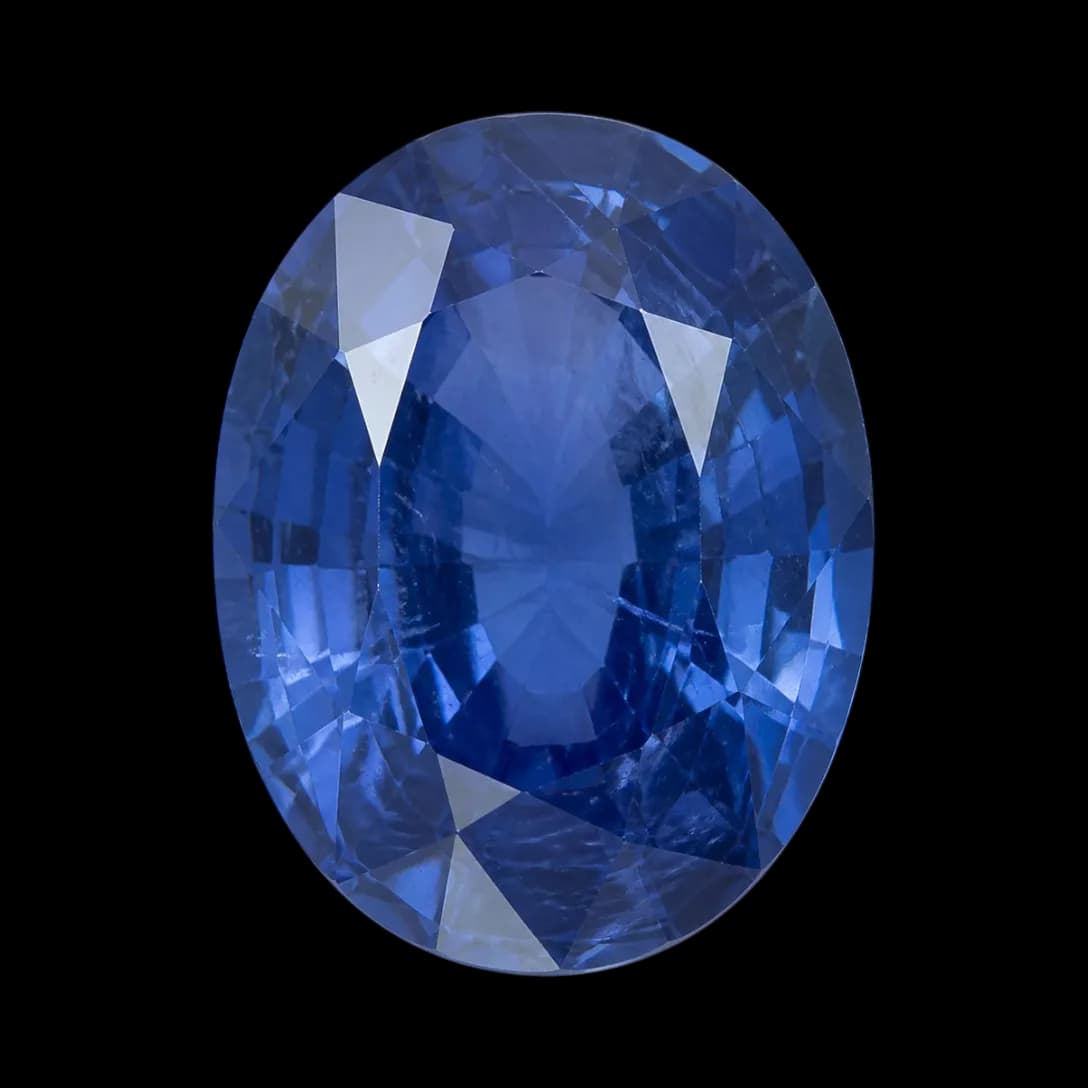
Sapphire
Corundum in every color except red, the most versatile precious stone.
Sapphire is the non-red variety of corundum, though blue sapphire is by far the most recognized and commercially important. The stone's exceptional hardness (9 on Mohs), broad color range, and historical significance make it one of the most important gemstones in the trade. Kashmir sapphires are legendary for their velvety blue color and cornflower hue, while Sri Lankan (Ceylon) and Myanmar stones also carry strong provenance premiums. Padparadscha, a rare pink-orange variety, is among the most sought-after colored gemstones in existence.
What are the properties of sapphire?
| Hardness (Mohs) | 9 |
| Refractive Index | 1.762–1.770 |
| Specific Gravity | 3.95–4.03 |
| Crystal System | Trigonal |
| Chemical Formula | Al₂O₃ (with Fe, Ti) |
Color Varieties
Major Sources
Sri Lanka · Myanmar · Kashmir (historical) · Madagascar · Australia · Montana (USA) · Thailand
What affects sapphire price?
Color
Vivid, medium-toned blue without grayish or greenish modifiers commands the highest prices. Kashmir 'cornflower' blue is the reference standard.
Origin
Kashmir sapphires can sell for 10x the price of equivalent stones from other origins. Sri Lankan and Burmese stones carry strong premiums.
Treatment
Heat treatment is standard and accepted. Beryllium-diffused sapphires are controversial and trade at significant discounts. Unheated stones carry 50–200%+ premiums.
Variety
Padparadscha sapphires are among the rarest and most expensive varieties. Color-change sapphires also command strong premiums.
How much does sapphire cost per carat?
Retail prices as of mid-2026. Actual cost depends on color, clarity, origin, and treatment.
| Quality | Price/ct | Notes |
|---|---|---|
| Commercial (heated, small) | $200–$800/ct | Mass-market heated blue, sub-1ct |
| Good (heated Ceylon, 1ct) | $800–$2,500/ct | Fine vivid blue, GIA cert, heated |
| Fine (unheated Ceylon, 1ct) | $2,000–$8,000/ct | Unheated, GIA/GRS certified |
| Exceptional (unheated, 3ct+) | $8,000–$30,000+/ct | Unheated Ceylon or Burma, large sizes |
| Kashmir | $20,000–$200,000+/ct | Historic source, extremely rare |
Is sapphire good for an engagement ring?
Sapphire is one of the best colored stones for engagement rings. At 9 Mohs it is the second hardest gem material, hard enough for a lifetime of daily wear with minimal risk of scratching.
Pros
- 9 Mohs hardness, second only to diamond
- Available in blue, pink, padparadscha, and other colors
- Strong resale market for fine untreated stones
- Works in prong, bezel, and halo settings
Cons
- Fine unheated stones cost significantly more than heated equivalents
- Very dark or very light stones can look flat in ring settings
Setting advice
Prong and bezel settings both work well. Protect corners on emerald-cut sapphires. Match the metal to the color: white gold for blue, rose gold for pink or padparadscha.
Princess Diana's 12-carat Ceylon blue sapphire, now worn by Kate Middleton, is the most famous sapphire engagement ring in history.
How to care for sapphire
Do
- Clean with warm soapy water and a soft brush
- Ultrasonic and steam cleaning are generally safe for untreated or heat-only treated sapphires
- Excellent for daily wear due to exceptional hardness
Don't
- Don't use ultrasonic on diffusion-treated or fracture-filled stones
- Avoid sudden temperature changes
- Don't expose to harsh chemicals unnecessarily
Cleaning Method
Warm soapy water is the safest universal method. Ultrasonic and steam cleaners work well for most sapphires. Always verify the treatment before choosing a cleaning method.
How to buy sapphire
For engagement rings, sapphire is the best colored stone option. 9 on Mohs means it handles daily wear beautifully.
Montana sapphires offer unique teal and blue-green colors at accessible price points.
Heat-treated sapphires are industry standard. Don't overpay for unheated unless the lab report is from a top lab.
View sapphires in multiple lighting conditions. They can shift dramatically between daylight and incandescent light.
Consider padparadscha sapphires as a distinctive alternative to pink diamonds at a fraction of the cost.
Did You Know?
Princess Diana's engagement ring, now Kate Middleton's, features a 12-carat Ceylon blue sapphire.
The word 'sapphire' comes from the Greek 'sappheiros,' which may have originally referred to lapis lazuli.
Star sapphires display a six-rayed star pattern called asterism, caused by needle-like rutile inclusions.
Frequently asked questions
How much does a 1 carat sapphire cost?
A 1 carat blue sapphire runs $200 to $30,000+ depending on color, origin, and treatment, as of mid-2026. Commercial heated stones in the $800 to $2,500 range are what most retailers stock. Unheated Ceylon or Burmese stones with strong saturation and lab reports sit at the top of that spread.
Is sapphire good for engagement rings?
Yes. At 9 on the Mohs scale, sapphire is the second hardest gem after diamond and handles daily wear without issue. It resists scratching from household contact and holds a polish well over decades. That is why it has been a staple in fine jewelry for centuries.
What is the difference between heated and unheated sapphire?
Heat treatment improves color and clarity by dissolving rutile silk and evening out tone. It is standard in the trade and accepted on GIA reports as a permanent, stable treatment. Unheated stones with comparable color command 50% to 200%+ premiums because they are rarer and require no enhancement to reach marketable quality.
What is the best sapphire color?
Vivid, medium-toned blue without gray or green modifiers is the trade benchmark. Kashmir cornflower blue sets the reference, though fine Ceylon and Burmese stones match it at lower price points. Padparadscha pink-orange is the most prized fancy color, often exceeding fine blue in per-carat price.
Sapphire vs diamond for an engagement ring: which is better?
Diamond wins on hardness (10 vs 9) and resale liquidity. Sapphire wins on color personality, size for the budget, and historical prestige in colored stone rings. Princess Diana's Ceylon sapphire ring made blue sapphire the most searched colored stone for engagement settings, and it remains a practical choice for buyers who want something distinctive without sacrificing durability.
Related Resources
Related Gemstones
Diamond
The hardest natural substance and the benchmark of the gemstone world.
Ruby
The king of colored gemstones, valued for its vivid red brilliance.
Spinel
The great imposter, historically mistaken for ruby and sapphire, now prized in its own right.
Tanzanite
Found in only one place on earth, a violet-blue stone rarer than diamond.
Last updated: 2026-08-12