Diamond
The hardest natural substance and the benchmark of the gemstone world.
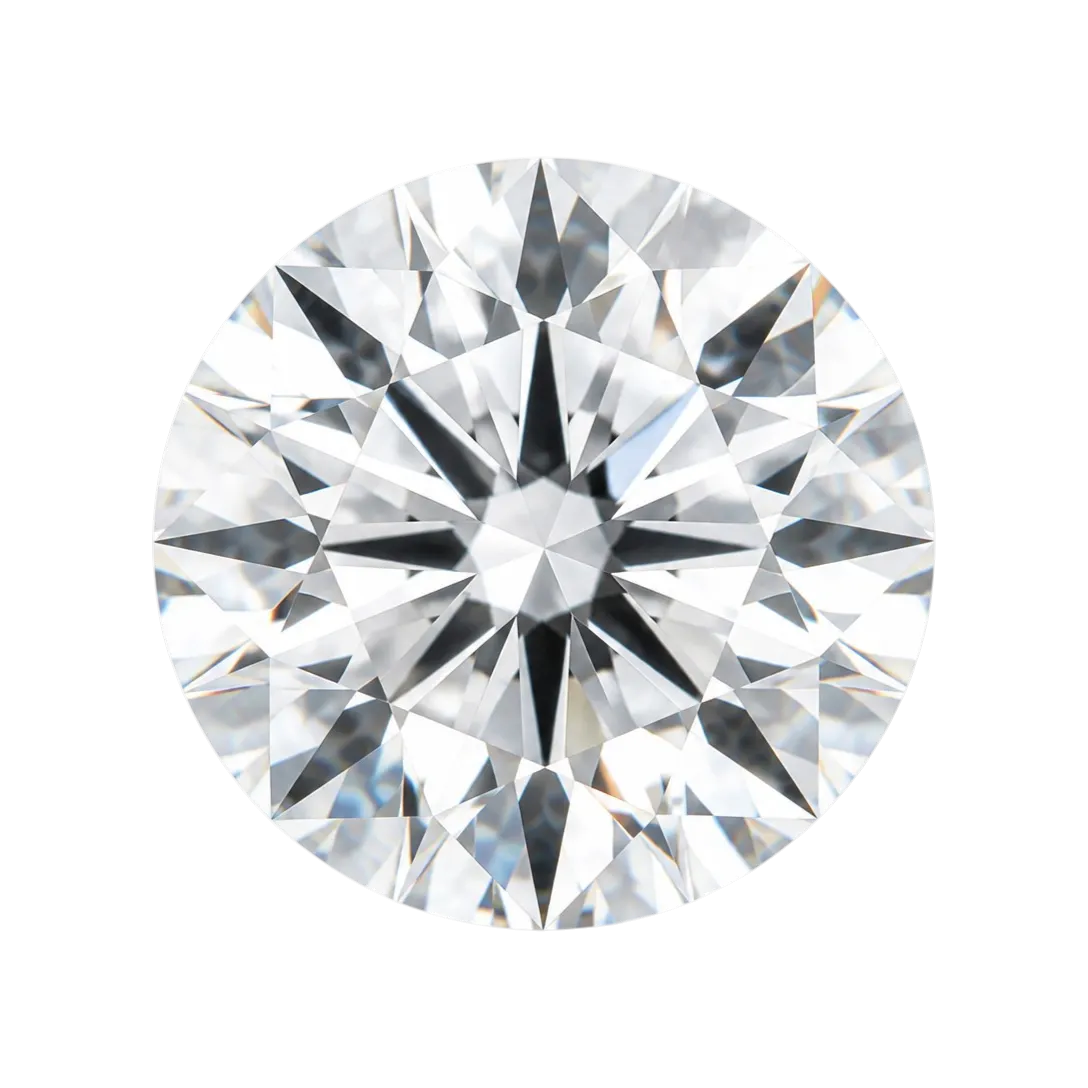
Diamond is the most iconic and commercially significant gemstone on earth. Composed of pure carbon arranged in a cubic crystal lattice, its extreme hardness (10 on the Mohs scale), exceptional brilliance, and cultural significance have made it the dominant stone in engagement rings and fine jewelry. The diamond market is split between natural stones, formed over billions of years deep in the earth's mantle, and lab-grown diamonds, which replicate the same physical and chemical properties through HPHT or CVD processes.
What are the properties of diamond?
| Hardness (Mohs) | 10 |
| Refractive Index | 2.417 |
| Specific Gravity | 3.52 |
| Crystal System | Cubic (Isometric) |
| Chemical Formula | C |
Color Varieties
Major Sources
Botswana · Russia · Canada · South Africa · Australia · Angola · DRC
What affects diamond price?
The 4Cs (Cut, Color, Clarity, Carat)
Cut quality is the single biggest driver of brilliance. Color and clarity are graded on standardized GIA scales. Price per carat increases exponentially at benchmark weights (0.50ct, 1.00ct, 2.00ct).
Certification
GIA-certified stones command the highest premiums. AGS, IGI, and HRD are also respected. Uncertified stones trade at significant discounts.
Fluorescence
Strong blue fluorescence can lower the value of colorless diamonds by 5–15%, though faint to medium fluorescence has minimal impact and may improve the perceived color of lower-grade stones.
Origin (natural vs lab-grown)
Lab-grown diamonds are chemically identical but trade at 70–90% below natural diamond prices. Resale value for lab-grown is currently near zero.
How much does diamond cost per carat?
Retail prices as of mid-2026. Actual cost depends on color, clarity, origin, and treatment.
| Quality | Price/ct | Notes |
|---|---|---|
| Budget (I1, J–K, 1ct) | $1,400–$2,400 | Natural with visible inclusions. Lab-grown equivalent: $300–$500 |
| Value (SI1–SI2, H–I, 1ct) | $2,400–$3,800 | Eye-clean at distance, warm tint. Lab-grown equivalent: $400–$700 |
| Sweet spot (VS2, G, 1ct) | $4,200–$5,500 | Best balance of look and price. Lab-grown equivalent: $500–$1,200 |
| Fine (VVS1–VVS2, E–F, 1ct) | $6,500–$10,000 | Near-colorless, high clarity. Lab-grown equivalent: $800–$1,500 |
| Premium (D, IF, 1ct) | $12,000–$25,000+ | Top color and clarity grades. Lab-grown equivalent: $1,200–$2,500 |
How to care for diamond
Do
- Clean regularly with warm soapy water and a soft brush
- Store separately. Diamonds scratch other gems
- Get prongs checked by a jeweler every 12 months
Don't
- Don't expose to harsh chemicals (chlorine, bleach)
- Don't wear during heavy manual work. Diamonds can chip along cleavage planes
- Don't use ultrasonic cleaners on heavily included stones
Cleaning Method
Warm soapy water with a soft toothbrush is the safest. Ultrasonic and steam cleaners are safe for most diamonds but avoid them with heavily included, fracture-filled, or coated stones.
How to buy diamond
Prioritize cut grade over everything. An Excellent cut outperforms a higher color/clarity stone with a poor cut.
Buy just under benchmark carat weights (0.90ct instead of 1.00ct) to save 15–20% with virtually no visible difference.
Request the actual GIA report number and verify it on GIA's website before purchasing.
For engagement rings, eye-clean SI1 diamonds offer the best value. Inclusions are invisible to the naked eye.
Consider H or I color diamonds in yellow gold settings where the warm tone is masked by the metal.
Did You Know?
The word 'diamond' comes from the Greek 'adamas,' meaning invincible.
Diamonds form at depths of 150–200 km below earth's surface under extreme pressure and temperature.
The De Beers slogan 'A Diamond is Forever' was created in 1947 and fundamentally shaped consumer demand.
Frequently asked questions
How much does a 1 carat diamond cost?
A 1 carat natural diamond costs $1,400 to $25,000+ at online retail in mid-2026, depending on the 4Cs and certification. The median for a well-cut G color, VS2 clarity stone with a GIA report sits around $4,850. Lab-grown diamonds with the same specs typically run $500 to $1,200.
Are lab-grown diamonds real diamonds?
Yes. Lab-grown diamonds are chemically, physically, and optically identical to natural diamonds. Both are pure carbon in a cubic crystal structure. The only difference is origin: one formed underground over billions of years, the other was created in a lab over weeks using HPHT or CVD.
What is the best diamond grade for the money?
G color with VS2 clarity and an Excellent or Ideal cut is the sweet spot most dealers recommend. You get a stone that looks colorless to the naked eye, no visible inclusions, and maximum light return. Going to D/IF adds thousands with almost no visible difference in a ring setting.
Do diamonds hold their value?
Natural diamonds hold some resale value, but rarely what you paid retail. Expect 30% to 60% of purchase price on the secondary market for certified stones in common sizes. Lab-grown diamonds have near-zero resale value today. Fine natural diamonds above 2 carats with top grades hold value better than commercial-grade stones.
Related Resources
Related Gemstones
Glossary Terms
Comparisons
Last updated: 2026-08-12